Northeast India (2026)
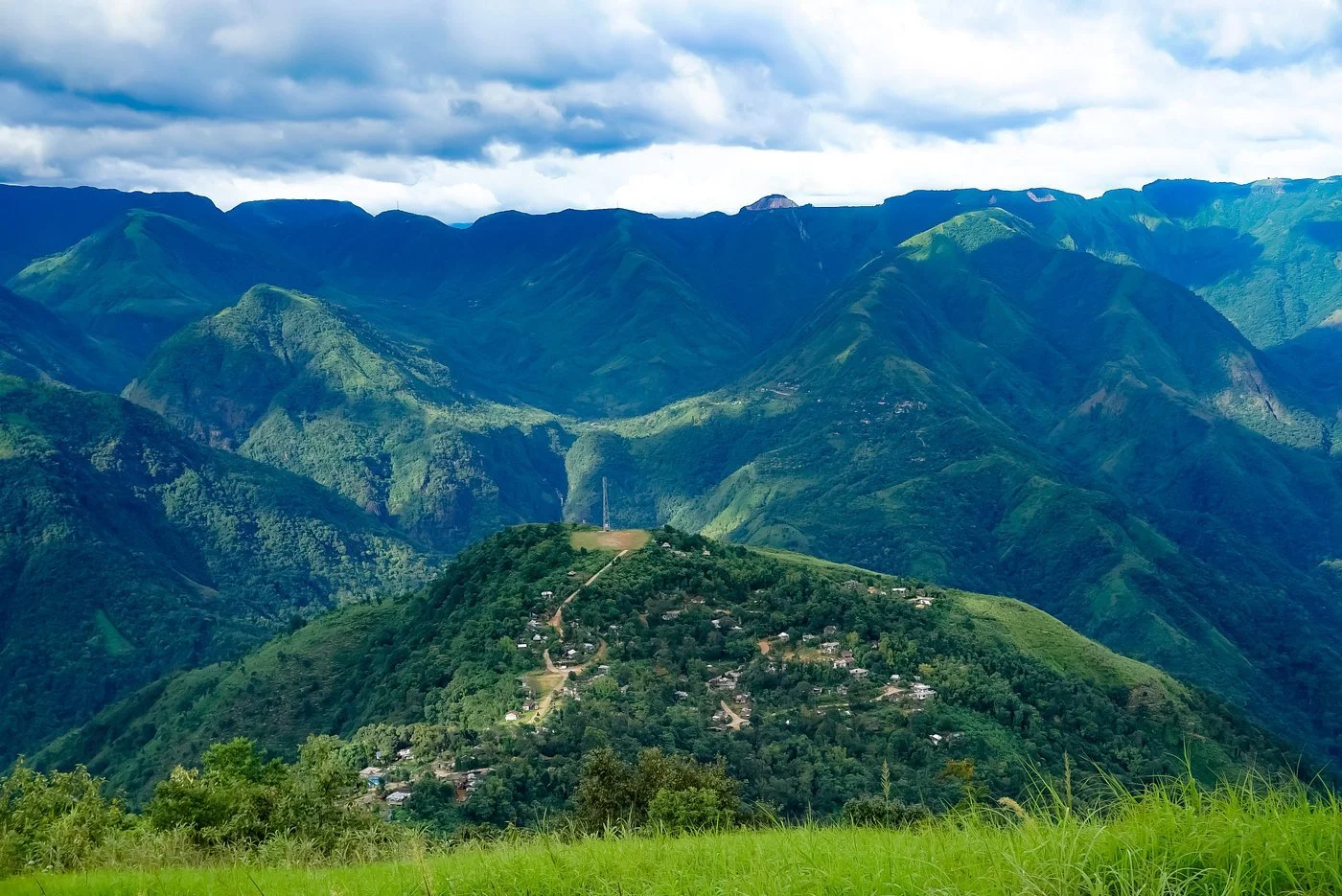
As I walked through Kongthong, mountains and forests stretching as far as the eye could see, some of the youngest villagers introduced themselves. But it wasn’t by name, not in the way I understood names. It was a song.
Tucked into the heart of the Khasi Hills in Northeast India, resides a distinctive Khasi community. Indigenous to the hills of Meghalaya, deeply connected to the land. Every person in Kongthong is recognized by their own unique song, locally known as jingrwai ïawbei. It is a strong tradition, over centuries old.
The End of a Name
I arrived in Kongthong at a tragic, yet notable moment. Aside from a few children playing along the road, the village felt unusually quiet, as far as I could sense. I soon learned why: one of the villagers had passed away, and most people had gathered for the funeral. The man was Christian and he was buried that afternoon. With a final breath, the life of the jingrwai ïawbei ends as well. The song is not passed on and will never outlive the identity. A name leaves earth with the one who carried it.
A Mother Lovesong
A child’s legal name is given through the father’s family. The jingrwai ïawbei belongs to the mother. Composing it is both her responsibility, and her honor. Translated from Khasi, the term means “a mother’s love song”.
When visiting one of the elders’ homes, she was eager to share her own jingrwai ïawbei, as well as those of her children. She said she could still remember the feeling of holding each child for the first time, the moment their names came to life, more than thirty years ago. Though the main song, up to a minute long, is defined by the mother, it might be interpretted in different ways, yet never losing the original shifting melody: You could hear it being whistled across hills, hummed along the croplands, or shortened in an intimite setting.
A Name is Personal
Names carry a particular weight in Khasi culture. For the people in Kongthong specifically, their jingrwai ïawbei is not solely rooted in emotion; one of its main purposes is spiritual protection. The melody is said to confuse evil spirits that listened for who to strike within the community. A voice could pass through the village without revealing who it belonged to. You won’t hear a jingrwai ïawbei here, and ethically speaking, I’m not sure it should be shared outside the community at all.
Cultural Changes
For generations, Kongthong has maintained its traditional culture and spirituality. While Christian missionary activity began in the broader Khasi Hills in the mid-19th century, its influence reached Kongthong gradually and never overtook local tradition. The Indigenous Seng or Niam Khasi faith remains dominant in the village.
The most significant change came instead through infrastructure. The road connecting Kongthong to the capital of Shillong eased travel and access, carrying other things with it: new opportunities for the youth, several new cultural influences, and new ideas about what progress “should” look like. Cultural practices that once moved easily through everyday life began to feel rusty. Some were left behind.
Preservation of Khasi Culture
After decades of witnessing these changes, it was the elders of Kongthong who stepped forward. They worked to protect their heritage, most notably, the songs that never faded. Their efforts strengthened the community, and as visitors slowly began to arrive with curiosity, the Khasi of Kongthong felt the urgency to sustain traditions, re-rooted rather than detached.
As a result, everyone in Kongthong still has their own jingrwai ïawbei. It isn’t performed or archived in a way. It’s just being used.